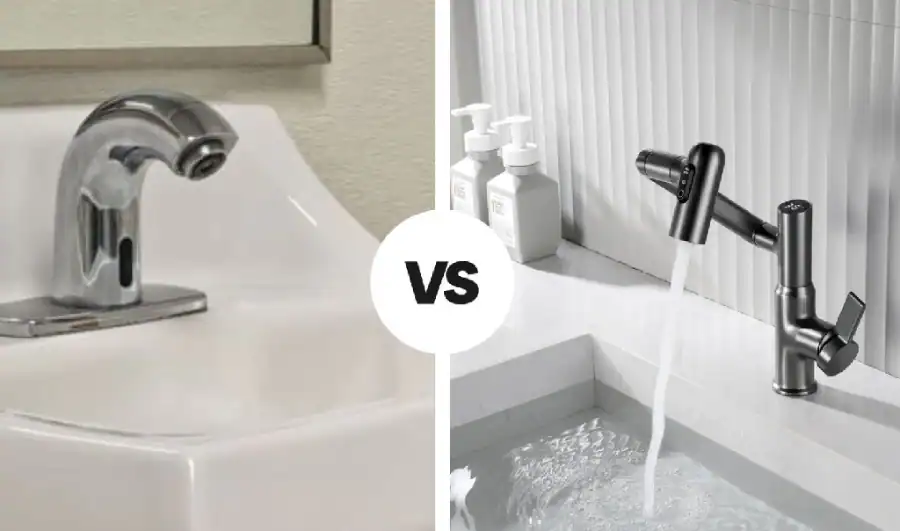
When upgrading your kitchen or bathroom, picking the right faucet is more than just a design choice, it’s a practical decision that affects things like hygiene, convenience, and water efficiency. With plumbing technology innovations, homeowners now choose between traditional manual faucets and modern touchless models. Both options offer unique benefits and potential drawbacks.
This guide will compare traditional vs. touchless faucets, helping you make an informed decision for your home.
Understanding Traditional Faucets
Traditional faucets are the classic choice for kitchens and bathrooms. These fixtures require manual operation, typically through handles or knobs that control water flow and temperature. Available in a large array of styles, finishes, and designs, traditional faucets remain popular for their simplicity and reliability.
Pros of Traditional Faucets
- Affordability: Traditional faucets are the more budget friendly option.
- Design Variety: There is a wide range of designs, allowing homeowners to match faucets with any interior style.
- Simplicity and Reliability: Fewer electronic components mean fewer potential malfunctions.
- Ease of Installation: These faucets do not require a power source, simplifying installation.
Cons of Traditional Faucets
- Hygiene Concerns: Manual operation can lead to the spread of germs, particularly in high traffic bathrooms and kitchens.
- Water Wastage: It’s easy to leave the water running while performing tasks, leading to higher water bills.
- Maintenance Issues: Frequent use can lead to wear and tear on handles and internal components, causing leaks over time.
Touchless Faucets
Touchless faucets, also known as sensor faucets, have become increasingly popular in both residential and commercial settings. These faucets use motion sensors to detect the presence of hands, automatically activating water flow without physical contact.
Pros of Touchless Faucets
- Improved Hygiene: Hands free operation reduces the risk of spreading germs and bacteria, making touchless faucets ideal for kitchens and bathrooms.
- Water Efficiency: Automatic shut off features help conserve water, contributing to lower utility bills.
- Convenience: These faucets are particularly useful when your hands are full or dirty, providing easy access to water.
- Modern Design: Sleek and contemporary styles can improve the overall aesthetic of your space.
Cons of Touchless Faucets
- Higher Initial Cost: Due to advanced technology, touchless faucets tend to be more expensive than traditional models.
- Power Dependency: These faucets require batteries or a power outlet, adding potential maintenance tasks.
- Sensor Sensitivity Issues: Occasionally, sensors may fail to detect hands properly, leading to water flow interruptions.
Comparing Traditional vs. Touchless Faucets
| Feature | Traditional Faucets | Touchless Faucets |
| Operation | Manual, handle or knob based | Hands free, motion sensor activated |
| Hygiene | Increased germ spread risk | Minimizes contact promotes cleanliness |
| Water Efficiency | Prone to wastage if left running | Automatic shut off to save water |
| Installation | Simple, no power needed | Requires batteries or electrical setup |
| Maintenance | Lower technology related issues | Potential sensor and battery issues |
| Cost | Generally more affordable | Higher upfront investment |
| Design Options | Wide range of styles and finishes | Modern and sleek designs |
Which Faucet is Right for You?
Choosing between a traditional and touchless faucet involves evaluating your lifestyle, budget, and specific needs in your kitchen or bathroom. Each option offers distinct benefits and caters to different priorities, from design preferences to hygiene standards.
Traditional Faucet
Traditional faucets are ideal if you’re working within a budget. They typically come at a lower cost, making them a practical choice for homeowners looking to save money while still achieving a stylish and functional space. If your home leans towards classic, rustic, or vintage interior design, traditional faucets can match any décor. These fixtures offer a straightforward, technology free experience, which can be beneficial if you prefer simplicity and ease of use. Additionally, traditional faucets are an excellent option when the installation area does not have easy access to power, eliminating the need for batteries or electrical connections.
Touchless Faucet
A touchless faucet is a superior choice if hygiene is a top priority, such as in busy kitchens or guest bathrooms. These faucets help reduce the spread of germs by allowing hands free operation. They are also perfect for those looking to improve water efficiency, as sensors automatically shut off the water when not in use, contributing to lower water bills and an eco friendly home. A touchless faucet is a smart investment if you desire a modern, high tech ambiance in your space, offering convenience and style. However, be prepared for the maintenance requirements, including battery replacements and potential sensor adjustments, to keep your faucet functioning optimally.
Touchless Faucet Brands
Choosing a reputable brand maintains quality, durability, and advanced technology when investing in a touchless faucet. Here are some top touchless faucet brands to consider:
Moen: Moen is a leader in plumbing fixtures and is known for its durable and efficient touchless faucets. The brand emphasizes water conservation with advanced sensor technology, making it a smart choice for eco conscious homeowners. Moen’s designs blend modern aesthetics with robust performance, offering long lasting value.
Kohler: Kohler stands out for combining style with functionality. The brand offers sleek, contemporary designs and reliable sensor technology that delivers consistent performance. Kohler’s touchless faucets improve hygiene and convenience in your kitchen or bathroom.
Delta: Delta faucets offer a perfect balance of innovation and tradition. Many of their touchless models include a manual override option, giving users flexibility and control. Delta is ideal for those who appreciate advanced technology without fully abandoning manual operation.
Pfister: If you are looking for budget friendly touchless faucet options, Pfister delivers. The brand provides touchless features competitively, keeping homeowners can enjoy modern technology without breaking the bank. Pfister offers dependable performance and straightforward installation, ideal for cost conscious upgrades.
Making the Right Choice for Your Home
When choosing between traditional and touchless faucets, consider your budget, hygiene needs, design preferences, and maintenance expectations. Traditional faucets offer affordability and timeless designs, while touchless models bring advanced technology and improved hygiene to your home. Whether you opt for classic reliability or modern convenience, LaCassa Plumbing Inc. can provide professional installation and maintenance services. Contact us today to learn more about our plumbing services in Naperville and beyond.
Ready to Upgrade Your Faucets?
Contact LaCassa Plumbing Inc. today for a consultation on your kitchen sink repair or bathroom faucet installation. We provide professional, reliable plumbing services throughout Naperville and the entire DuPage County area, including 24/7 emergency plumbing services. Visit or call us to schedule an appointment!
FAQs About Traditional and Touchless Faucets
Do touchless faucets save water?
Yes, touchless faucets are designed with water conservation in mind. Their built in sensors automatically activate and deactivate the water flow, making sure that water only runs when needed. This feature is particularly beneficial in busy kitchens and bathrooms, where frequent handwashing or dish rinsing occurs. By preventing the faucet from being left on unintentionally, touchless models can help reduce water waste and contribute to lower utility bills over time.
Are touchless faucets difficult to install?
Touchless faucets typically require a power source, either through batteries or a direct electrical connection. They also need proper sensor calibration to function correctly. While many models come with straightforward installation instructions, the process can be more complex than installing a traditional faucet. Professional installation is often recommended for optimal performance and to avoid potential issues, especially if wiring or plumbing modifications are needed.
How do I maintain a touchless faucet?
Maintenance of a touchless faucet involves keeping the sensor area clean to avoid dust and debris build up, which could interfere with its ability to detect motion. Regularly wiping the sensor with a damp cloth is usually sufficient. Additionally, checking and replacing batteries as needed keeps uninterrupted operation. Depending on the model, you may also need to adjust the sensor sensitivity periodically.
Can I convert my traditional faucet to a touchless model?
Yes, conversion kits allow you to transform a standard faucet into a touchless model. These kits generally include motion sensors and control boxes that can be installed on existing fixtures. However, while this option can be cost effective, it may not always provide the same aesthetic appeal or functionality as a fully integrated touchless faucet. In many cases, installing a new faucet designed specifically for touchless use offers a more seamless and attractive solution.
Are traditional faucets still a good choice in modern homes?
Absolutely. Traditional faucets are a popular choice in modern homes, particularly for those who appreciate timeless design and simpler technology. They offer a broader range of styles and finishes, making matching them with various kitchen and bathroom decors easier. Additionally, traditional faucets are typically more affordable and require less maintenance than touchless models, making them a practical choice for budget conscious homeowners or those who prefer straightforward functionality.
Are You Ready to Get Started? Contact Your Local Plumber Today


Get Fast, Reliable Plumbing Service
Fill Out the Form or Call Us Now
"*" indicates required fields